metadata.csv
Stable scan and sample identifiers, processing-condition labels, replicate numbers, and paths to all nine patterns.
 FrontierChallenge: A scientific workflow benchmark
Materials characterization · Hard
Correct instrumental zero shift, quantify ferrite and austenite, and carry the calculation from nine raw scans to a reproducible sample-level handoff.
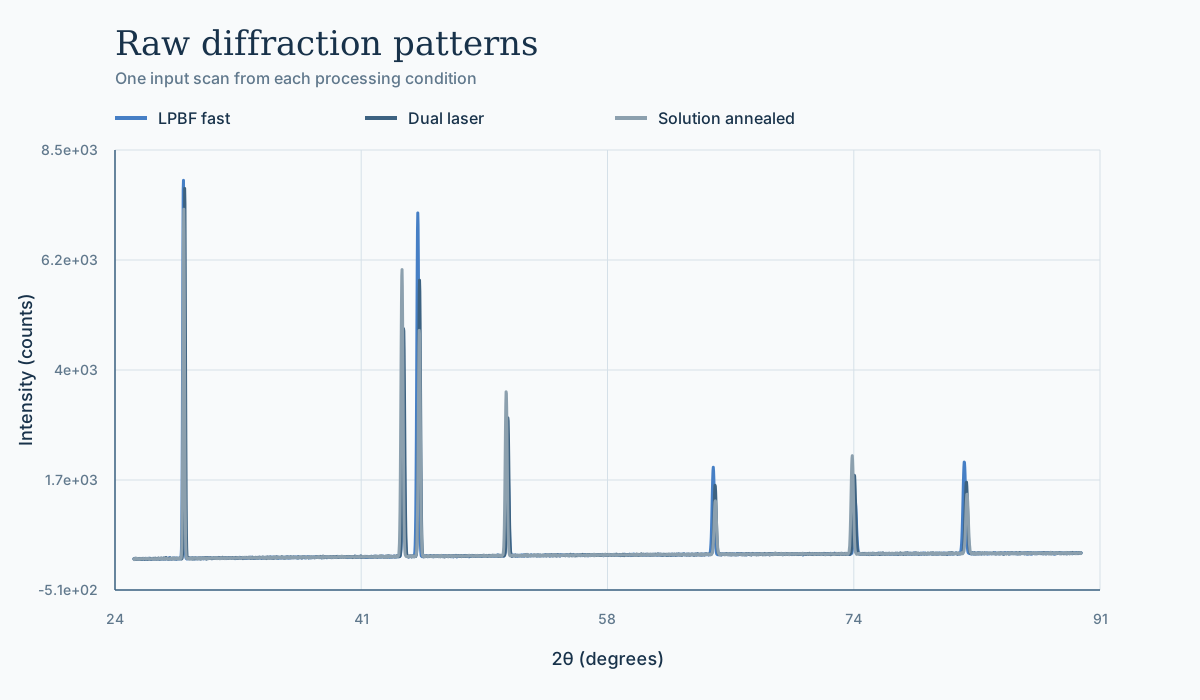
The input bundle combines raw patterns with the structured records needed to make every correction and aggregation traceable.
Stable scan and sample identifiers, processing-condition labels, replicate numbers, and paths to all nine patterns.
Deconvolved α/γ peaks plus the Si(111) internal-standard peak for each scan.
Phase, hkl indices, and weighting factors used by the phase calculation.
Cu Kα wavelength, silicon reference angle, declared formulas, and task-visible pitfalls.
Resolve every peak record and raw pattern through its stable scan identifier and retain replicate provenance.
Determine the per-scan shift from Si(111), apply it to peak positions, and keep the correction table auditable.
Exclude silicon from the phase calculation, use deconvolved α/γ peaks, and derive scan-level fractions and lattice parameters.
Summarize replicates by sample and reconcile the tables, annotated patterns, summary figure, and report.
A numerical conclusion alone cannot pass. The task asks for a complete, mutually consistent bundle.